
Ndigbo Worldwide Media.com
NewsCEPCCN NEWS COMMENTARY APPROVED AGE-BASED MEMBERSHIP AND EPSC FRAMEWORK: QUESTIONS AND ANSWERS
Joseph Chukwu·8 October 2026·5 min read·5 views
Ala Igbo
Ala Igbo
Enugu · Onitsha · the diaspora
Ndigbo Worldwide Media.com
NewsJoseph Chukwu·8 October 2026·5 min read·5 views
CEPCCN NEWS COMMENTARY
APPROVED AGE-BASED MEMBERSHIP AND EPSC FRAMEWORK: QUESTIONS AND ANSWERS
Abuja, Nigeria — The Christian Elders and Professionals Consultative Council of Nigeria (CEPCCN) has formally adopted its Age-Based Membership and Elders and Professionals Supreme Council (EPSC) Framework, providing institutional guidance on Elder Membership, qualification for the EPSC, intergenerational participation and the relationship between senior policy responsibility and executive administration.
The framework is an approved institutional policy of CEPCCN, adopted pursuant to the authority of the CEPCCN Constitution and applicable governing instruments.
For the avoidance of doubt, the CEPCCN Constitution remains the supreme governing instrument of the institution. The approved framework shall therefore be interpreted and implemented consistently with the Constitution and shall not be construed as overriding, amending or superseding it, except through a duly authorised constitutional process.
Q1. What has CEPCCN now approved?
Answer:
CEPCCN has approved a structured framework establishing age-based categories for participation and setting qualification standards for membership of the Elders and Professionals Supreme Council.
The framework is designed to combine experience, Christian character, wisdom, professionalism, merit and service in strengthening institutional leadership, continuity and responsible participation.
Q2. What are the approved age categories?
Answer:
Under the approved institutional framework:
Age establishes eligibility for consideration; it does not, by itself, constitute automatic entitlement to office or leadership.
Q3. What qualifications are required for membership of the EPSC?
Answer:
In addition to the approved age threshold, an EPSC member should demonstrate:
The governing principle is:
«“Age establishes eligibility; character, merit, wisdom, competence and service determine suitability.”»
Q4. What is the approved role of the EPSC?
Answer:
The EPSC serves as the senior policy, consultative and strategic oversight organ of CEPCCN within the authority assigned to it by the Constitution and approved governing instruments.
Its functions include providing senior policy guidance, considering major institutional policies and strategic priorities, offering strategic counsel, promoting institutional continuity and succession, and performing other policy functions lawfully assigned to it.
The EPSC is therefore principally concerned with policy, consultation, strategic guidance and institutional oversight.
Q5. What is the role of the Director-General?
Answer:
The Director-General is the principal executive and administrative coordinating officer of CEPCCN.
The D-G is responsible for coordinating day-to-day administration, supervising institutional operations, implementing approved policies and decisions, assigning duties, issuing lawful administrative directives, monitoring performance and promoting accountability within the authority granted by the Constitution and governing instruments.
The institutional distinction is:
EPSC — Policy, Consultation, Strategic Guidance and Oversight.
Director-General — Administration, Coordination, Supervision and Implementation.
These functions are complementary and shall be exercised in accordance with constitutional authority, institutional cooperation and accountability.
Q6. Can the EPSC and Director-General exercise unlimited authority?
Answer:
No.
All authority within CEPCCN is subject to the Constitution, approved governing instruments and lawful delegation.
The EPSC shall not ordinarily assume executive functions assigned to the Director-General or another competent organ, while the Director-General shall not use executive authority to unilaterally alter constitutional provisions or matters reserved for the EPSC or another competent authority.
The governing principle is:
«“Authority within CEPCCN is constitutional, delegated and accountable — not personal or unlimited.”»
Q7. What role do younger Christian professionals have?
Answer:
Younger Christian professionals remain an important part of CEPCCN's institutional development.
Persons below 60 may participate, where eligible, as Associate Members and may contribute through professional, technical, executive, youth, research, administrative and other authorised structures.
The framework promotes intergenerational partnership, allowing senior members to transmit experience and institutional wisdom while younger professionals contribute contemporary knowledge, innovation and technical competence.
Q8. Why is intergenerational participation important?
Answer:
Sustainable institutions require continuity and responsible succession.
Senior members provide experience and institutional memory, while younger professionals contribute new skills, innovation and contemporary expertise.
CEPCCN therefore promotes cooperation between generations rather than competition between generations.
Q9. Does the approved framework amend the CEPCCN Constitution?
Answer:
No.
The framework is an approved institutional policy operating under the Constitution. It does not, by its adoption, amend, repeal, replace or supersede any constitutional provision.
Where any question arises concerning an apparent inconsistency between the framework and the Constitution, the Constitution shall prevail, unless lawfully amended through the prescribed constitutional process.
Q10. What is the legal and institutional status of the framework?
Answer:
The framework has been adopted as an approved internal institutional policy, binding within CEPCCN to the extent permitted by its Constitution and governing instruments.
It is to be observed by relevant members, officers and structures in the administration of membership and EPSC affairs.
Its institutional authority derives from the Constitution and approved governance framework and shall at all times be exercised consistently with applicable law.
Q11. What is the central philosophy behind the framework?
Answer:
CEPCCN recognise that age may bring experience, but experience achieves institutional value when supported by character, wisdom, competence and service.
Its philosophy is:
«Experience provides wisdom. Professionalism provides competence. Christian values provide a moral foundation. Service transforms them into institutional value.»
Q12. What is CEPCCN ultimately seeking to achieve?
Answer:
The framework is intended to strengthen CEPCCN through responsible leadership, institutional continuity, intergenerational cooperation, professional excellence, Christian values and accountable service.
Its purpose is not merely to establish age categories, but to ensure that experience is respected, merit is recognised, younger generations are prepared for responsible participation, and institutional leadership remains guided by wisdom and service.
OFFICIAL INSTITUTIONAL STATUS
STATUS: APPROVED INSTITUTIONAL POLICY FRAMEWORK
Constitutional Basis: Adopted pursuant to the authority of the CEPCCN Constitution and applicable governing instruments.
Constitutional Supremacy: The CEPCCN Constitution remains the supreme governing instrument of the institution.
Implementation: The framework shall be implemented consistently with the Constitution, approved governing instruments and applicable law.
Approval Date: ,1st October 2026
Effective Date: 7th October 2026
Resolution/Reference No.: CEPCCN/NEC/RES/2026/10/08-01
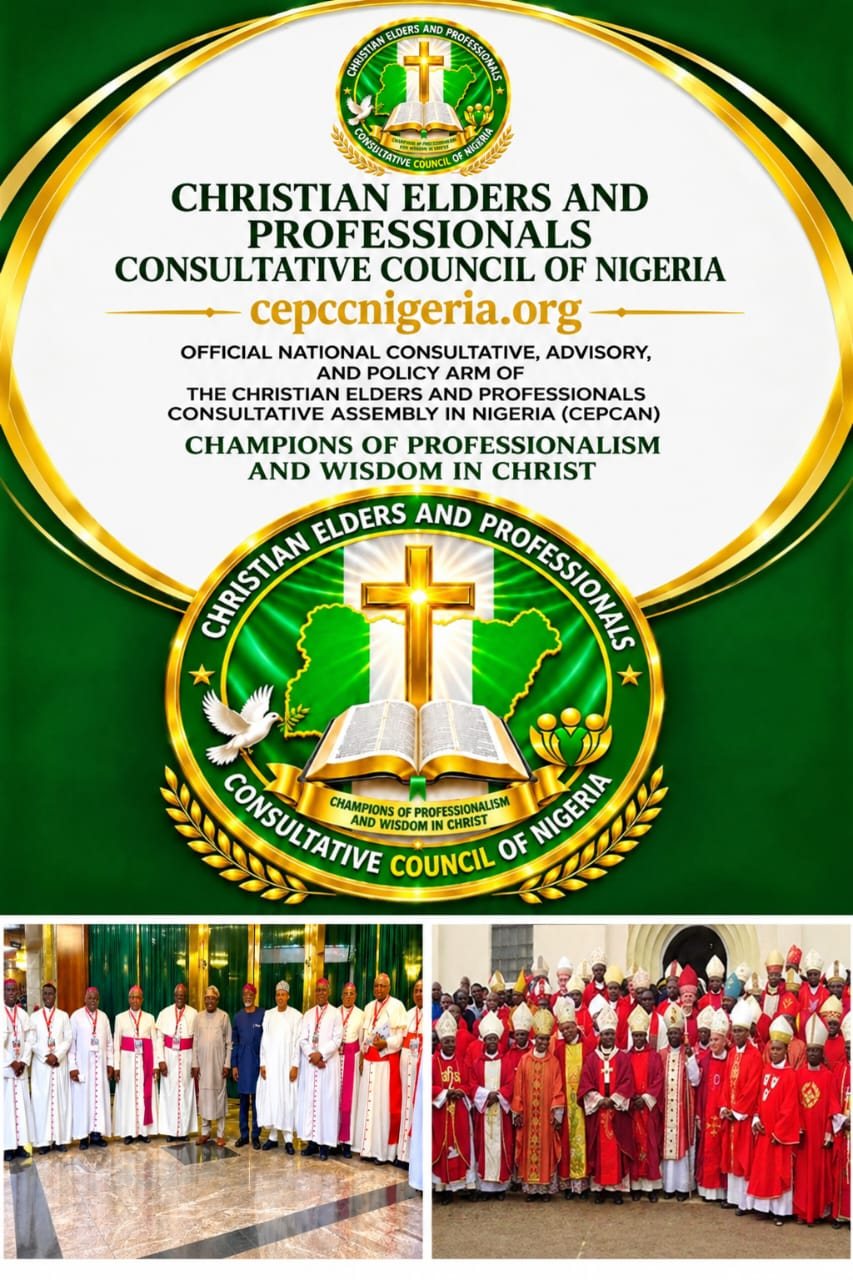
CHRISTIAN ELDERS AND PROFESSIONALS CONSULTATIVE COUNCIL OF NIGERIA (CEPCCN)
Official National Consultative, Advisory and Policy Arm of the Christian Elders and Professionals Consultative Assembly in Nigeria (CEPCAN), RC-127642
National Secretariat — Abuja, Federal Republic of Nigeria
“Champions of Professionalism and Wisdom in Christ.”
Issued under the authority of the National Leadership
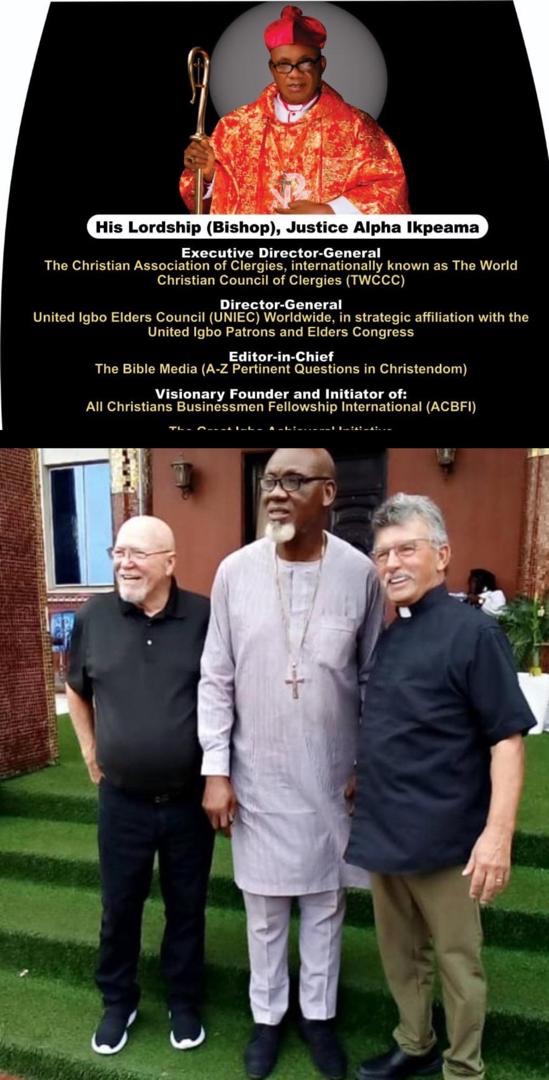
His Lordship (Bishop) Justice Alpha Ikpeama Director-General (D-G), CEPCCN
Contact: +234 817 577 7707 | +234 902 399 9919 | +234 703 280 0007 Email: cepccnigeria@gmail.com Website: www.cepccnigeria.org
CEPCCN CALLS FOR URGENT EDUCATION REFORM: SKILLS, INNOVATION AND NATIONAL DEVELOPMENT.
Ndubuisi Daniel Chidera · 16 Oct 2026 · 1 min · 23 views

UNIEC WORLDWIDE CALLS FOR CONSTITUTIONAL CLARITY, EQUITABLE DEVELOPMENT, IGBO UNITY AND PEACEFUL 2027 ELECTIONS.
Ndubuisi Daniel Chidera · 16 Oct 2026 · 3 min · 19 views

INEC APPOINTMENTS: Transparency, Fairness and National Unity. CEPCCN demands constitutional compliance, merit, equitable representation and accountability without prejudice.
Ndubuisi Daniel Chidera · 15 Oct 2026 · 4 min · 76 views