FROM REFORMS TO LIFE TRANSFORMATION: ANALYSE. ALIGN. APPLY. ARRIVE. CEPCCN calls for measurable results, responsible governance and continuous nation building beyond the 2027 elections.
Ndubuisi Daniel Chidera·8 October 2026·6 min read·12 views
CHRISTIAN ELDERS AND PROFESSIONALS CONSULTATIVE COUNCIL OF NIGERIA
(CEPCCN)
A Non-Political, Non-Partisan Christian Consultative, Advisory and Professional Institution
“Champions of Professionalism and Wisdom in Christ.”
NATIONAL SECRETARIAT — ABUJA, FEDERAL REPUBLIC OF NIGERIA
OFFICIAL INSTITUTIONAL QUESTIONS & ANSWERS
Reference: CEPCCN/NS/2026/10/08 | Date: 8 October 2026
FROM REFORMS TO LIFE TRANSFORMATION
Nigeria After the 2027 Elections: The Hard Work of Nation Building Begins Now
Issued by: The National Leadership, CEPCCN
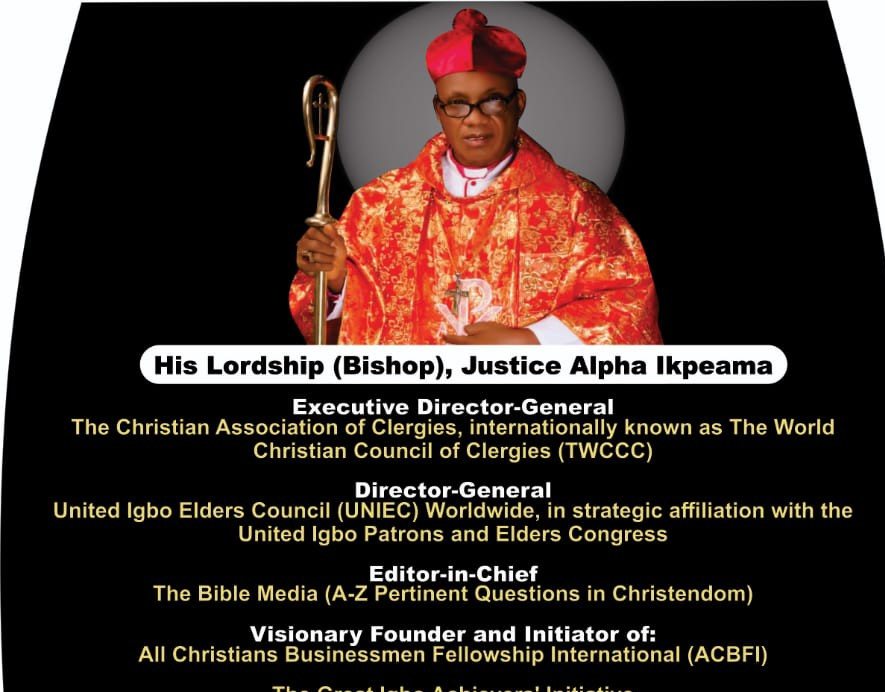
Issuing Authority: His Lordship (Bishop) Justice Alpha Ikpeama, Director-General (D-G)
EXECUTIVE SUMMARY
The Christian Elders and Professionals Consultative Council of Nigeria (CEPCCN) considers the post-2027 national conversation an opportunity to focus attention on the deeper responsibilities of nation building and the improvement of citizens’ lives.
In response to Professor Vincent C. Anigbogu’s presentation, CEPCCN emphasizes that elections provide an opportunity for citizens to choose leadership, while sustainable development depends on what institutions, leaders and citizens accomplish before and after the electoral process.
Economic reforms should ultimately produce tangible improvements in food security, employment, household incomes, education, healthcare, electricity, security, industrial productivity, poverty reduction and human dignity.
CEPCCN supports Science, Technology and Innovation (STI) as a disciplined, evidence-based approach to national problem-solving. It also recognizes that sustainable transformation requires cooperation among government, the private sector, professionals, universities, faith institutions, civil society, the media, traditional institutions, young people and citizens.
This document is an independent institutional commentary. It does not constitute an endorsement of Professor Anigbogu, INT International, LANST-NET, the STEP Delegate Leadership Summit, any political party, candidate, government or electoral interest.
10001143571000092758
1. WHAT IS THE CENTRAL QUESTION?
«“What happens after the election?”»
The answer lies in the quality of governance, institutional performance, policy implementation, responsible stewardship of public resources and the extent to which national priorities translate into improved living conditions.
«“Election is an event; nation building is a continuous responsibility.”»
2. WHAT DOES “FROM REFORMS TO LIFE TRANSFORMATION” MEAN?
Reforms should ultimately be reflected in citizens’ lived experience.
The desired outcomes include food security, productive employment, improved incomes, quality education, accessible healthcare, reliable electricity, safe communities, adequate housing, industrial productivity, reduced poverty and greater human dignity.
As the wisdom of our elders reminds us:
«“What is the value of repairing the roof if those inside the house continue to live in the rain?”»
The measure of successful reform should therefore include its practical impact on people and communities.
3. HOW CAN SCIENCE, TECHNOLOGY AND INNOVATION HELP?
Science, Technology and Innovation should be applied to real national problems rather than pursued merely for technological advancement.
Institutions should ask:
What is the problem? What evidence explains it? What are its root causes? What solution is appropriate? Who is responsible? What resources and timeline are required? How will success be measured?
This approach can strengthen agriculture, manufacturing, education, healthcare, energy, security, transportation, infrastructure and public administration.
4. WHAT ROLE SHOULD SOCIETY PLAY?
Government has major constitutional responsibilities, but national development requires complementary contributions from other sectors.
The private sector should promote investment, productivity and employment.
Universities and research institutions should generate applicable knowledge.
Professionals should provide competence and ethical expertise.
Faith institutions should strengthen moral formation, compassion and responsible citizenship.
Civil society and the media should support informed public dialogue and constructive accountability.
Young Nigerians should contribute knowledge, innovation, enterprise and civic responsibility.
Traditional and community institutions should promote peace, cohesion and community development.
«“A tree does not make a forest.”»
5. WHAT IS THE STEP FRAMEWORK?
STEP — Analyse, Align, Apply and Arrive — provides a practical sequence for converting national challenges into coordinated action.
ANALYSE: Understand the challenge and examine the evidence.
ALIGN: Bring relevant people, institutions and resources together.
APPLY: Convert knowledge, expertise and innovation into action.
ARRIVE: Deliver measurable outcomes.
The framework is most useful when supported by competence, inclusion, accountability and continuous evaluation.
6. WHAT SHOULD STAKEHOLDERS DO AROUND THE 2027 ELECTIONS?
Before the elections, political actors should present credible programmes; professionals and academics should develop practical solutions; businesses should prepare productive investment strategies; faith institutions should encourage ethical leadership; and civil society should promote informed civic participation.
After the elections, stakeholders should support policies that advance the public interest while offering constructive, professional and evidence-based counsel where improvement is required.
The objective should be continuity of national priorities rather than discontinuity based solely on political transitions.
10001142401000092746
CEPCCN’S FIVE PRACTICAL PRIORITIES
7. WHAT MEASURES DOES CEPCCN PROPOSE?
1. NATIONAL PRIORITY SCORECARD
Know What Must Be Achieved
Establish measurable national priorities covering employment, food security, education, healthcare, electricity, security, industrialization, productivity and poverty reduction.
Each priority should have a baseline, target, responsible institution, timeline, resources and performance indicators.
2. SECTORAL RESPONSIBILITY
Know Who Must Deliver
Translate national priorities into specific actions, assigning responsibility, resources, partnerships, timelines, outputs and indicators.
3. EVIDENCE-BASED POLICY
Know What Works
Policy decisions should follow a disciplined process:
Regular reviews should examine commitments, implementation, resources, results, challenges and corrective action, supported by responsible public communication.
5. POST-ELECTION NATIONAL ENGAGEMENT
Sustain What Works
National priorities should continue beyond electoral cycles through constructive engagement among government, professional bodies, private-sector institutions, universities, faith institutions, civil society, traditional institutions, youth and other relevant stakeholders.
Set the priority.
Assign responsibility.
Apply the evidence.
Measure performance.
Sustain what works.
8. IS CEPCCN A POLITICAL ORGANISATION?
No.
CEPCCN is a non-political and non-partisan Christian consultative, advisory and professional institution. It is neither a political party nor a campaign platform.
Its public engagement is guided by professional competence, evidence, constitutional values, Christian ethics, human dignity, public interest and the common good.
Non-partisanship does not prevent CEPCCN from commending constructive policies, raising legitimate questions or offering professional recommendations where improvement is necessary.
9. WHAT IS THE NATIONAL POST-ELECTION TRANSFORMATION DIALOGUE?
CEPCCN proposes a structured dialogue bringing together appropriate elders, professionals, academics, entrepreneurs, faith institutions, civil society, youth representatives and other relevant stakeholders.
The purpose is to convert national aspirations into practical priorities, recommendations, responsibilities, implementation timelines and measurable outcomes.
Such engagement should remain professional, consultative and focused on the public interest.
CLOSING CALL TO ACTION
Nigeria now requires a culture of responsible action, disciplined implementation and measurable results.
Let Government establish clear priorities, implement responsibly and remain accountable.
Let Political Actors promote peaceful democratic participation and credible programmes centred on national interest.
Let the Private Sector invest productively, create opportunities and support innovation.
Let Professionals and Academics apply knowledge, research and expertise to national challenges.
Let Faith Institutions strengthen moral leadership, compassion, peaceful coexistence and responsible citizenship.
Let the Media and Civil Society promote truth, informed dialogue and constructive scrutiny.
Let Young Nigerians pursue knowledge, skills, enterprise, innovation and meaningful civic participation.
Let Traditional and Community Leaders promote peace, cohesion and community development.
Let Every Citizen respect the law, protect public resources, work honestly and contribute to the common good.
THE NATIONAL CALL
«ANALYSE. ALIGN. APPLY. ARRIVE.»
Understand the challenge.
Unite for the solution.
Turn knowledge into action.
Deliver measurable results.
«From Problem to Purpose.
From Purpose to Partnership.
From Partnership to Performance.
From Performance to Progress.»
«“Election is an event; nation building is a continuous responsibility.”»
Nigeria belongs to all of us. Its future must therefore be built by all of us.
May wisdom guide our leaders, integrity strengthen our institutions, justice inform our decisions, and the common good remain our national compass.
10001142421000112196
OFFICIAL INSTITUTIONAL INFORMATION
CEPCCN is the Official National Consultative, Advisory and Policy Arm of the Christian Elders and Professionals Consultative Assembly in Nigeria (CEPCAN), RC-127642.
INEC APPOINTMENTS: Transparency, Fairness and National Unity. CEPCCN demands constitutional compliance, merit, equitable representation and accountability without prejudice.
Ndubuisi Daniel Chidera · 15 Oct 2026 · 4 min · 76 views